
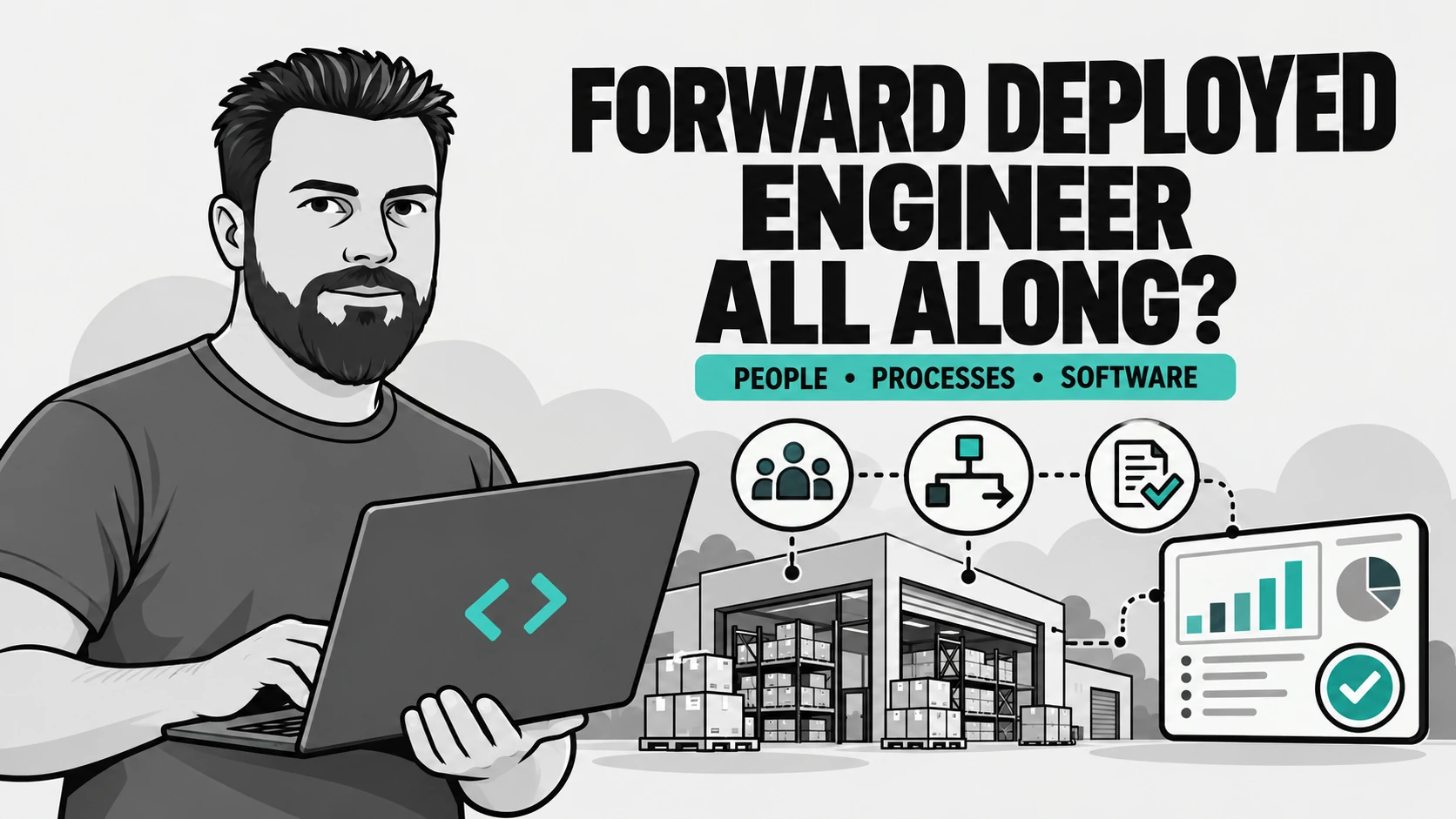
I recently heard someone describe a forward deployed engineer, and my first thought was: “That sounds like what I’ve been doing for most of my career.”
I had never used that title. My roles have included software engineering, consulting, presales, business analysis, solution architecture and technology leadership. But there has been a consistent thread: get close to the business, understand the problem, build the solution and stay involved until it works.
A forward deployed engineer—or FDE—works directly with customers to understand their operations and engineer solutions in that environment. It brings together technical delivery, business understanding and customer relationships.
One experience immediately came to mind.
At MECCA, the business was considering abandoning its Microsoft Dynamics NAV system. As the situation was described to me, calculating average inventory costs was taking too long, which affected its ability to accurately track financial performance. There were other unresolved issues, and confidence in the implementation was low.
I joined the internal IT team on what was initially intended to be roughly a nine-month engagement. It became about eighteen months.
We addressed the inventory costing problem early, reworking the underlying calculation code and checking that the results were correct. Then we moved through the reporting and functionality changes the business needed.
The pattern was familiar: understand the problem, examine the process, improve it, build the necessary changes or integrations, and move to the next issue.
What I enjoyed was being involved across that whole cycle.
In larger delivery teams, those responsibilities are often distributed. An account manager manages the relationship. A business analyst investigates the requirements. A developer builds the solution. An implementation team brings it into use.
Those specialisations have value. But I have always enjoyed bringing them together in my own work.
I like talking to customers. I like understanding how their businesses operate and building relationships with the people doing the work. I also like being able to explain what we can realistically change, then use my engineering skills to deliver it.
There is real satisfaction in making a commitment to someone and having the ability to follow it through yourself.
That mindset has stayed with me in internal roles. I have continued to think of the teams I support as my customers. Being employed by the same company has never changed my responsibility to understand what they need and help them succeed.
I would not retrospectively rename every role I have held. My leadership positions have also carried responsibilities well beyond engineering. But forward deployed engineering describes an approach I recognise throughout my career.
Many experienced ERP consultants and implementation engineers will probably recognise it too.
For me, discovering the term has helped explain why I have always gravitated towards work that combines people, processes and software.
I enjoy understanding the business well enough to know what needs to change—and understanding the engineering well enough to make that change happen.