
After 25 years in IT — with 10+ of those spent as a consultant — I’ve learned that sometimes you have to change sides to really understand the work you’ve been doing all along.
The Consulting Chapter
Consulting shaped most of my career. Over more than a decade, I worked with 33+ companies, implementing ERP systems, designing custom solutions, and guiding teams through transformation.
Being a consultant is an incredible education — you’re constantly moving, learning, adapting.
You see how different businesses operate, what strategies they chase, what challenges they face, and how people respond to change.
You develop an instinct for what works, and a healthy respect for how much context matters.
But there’s also something missing.
As a consultant, you deliver advice and implementation, but you rarely own the outcome.
You hand over the keys and move on. Someone else drives the car.
The Shift to the End User Side
After more than ten years of consulting, I wanted to see what happens after the go-live.
I started working embedded within the organisations that once hired me as a consultant — becoming part of their teams, not just their projects.
It changed everything.
When you’re the end user, you live with every decision you make.
Your ideas stop being slides in a presentation — they become real systems, real workflows, real people relying on what you’ve built.
That kind of ownership gives you a new level of empathy and accountability.
You see where the process friction hides, where the training gaps are, what data really drives behaviour.
You stop thinking like a visitor and start thinking like a builder inside the house.
🗣️ Steve Jobs on Ownership and Experience
Recently, I rewatched a 1995 interview with Steve Jobs, and one part stopped me in my tracks.
He said something to the effect of:
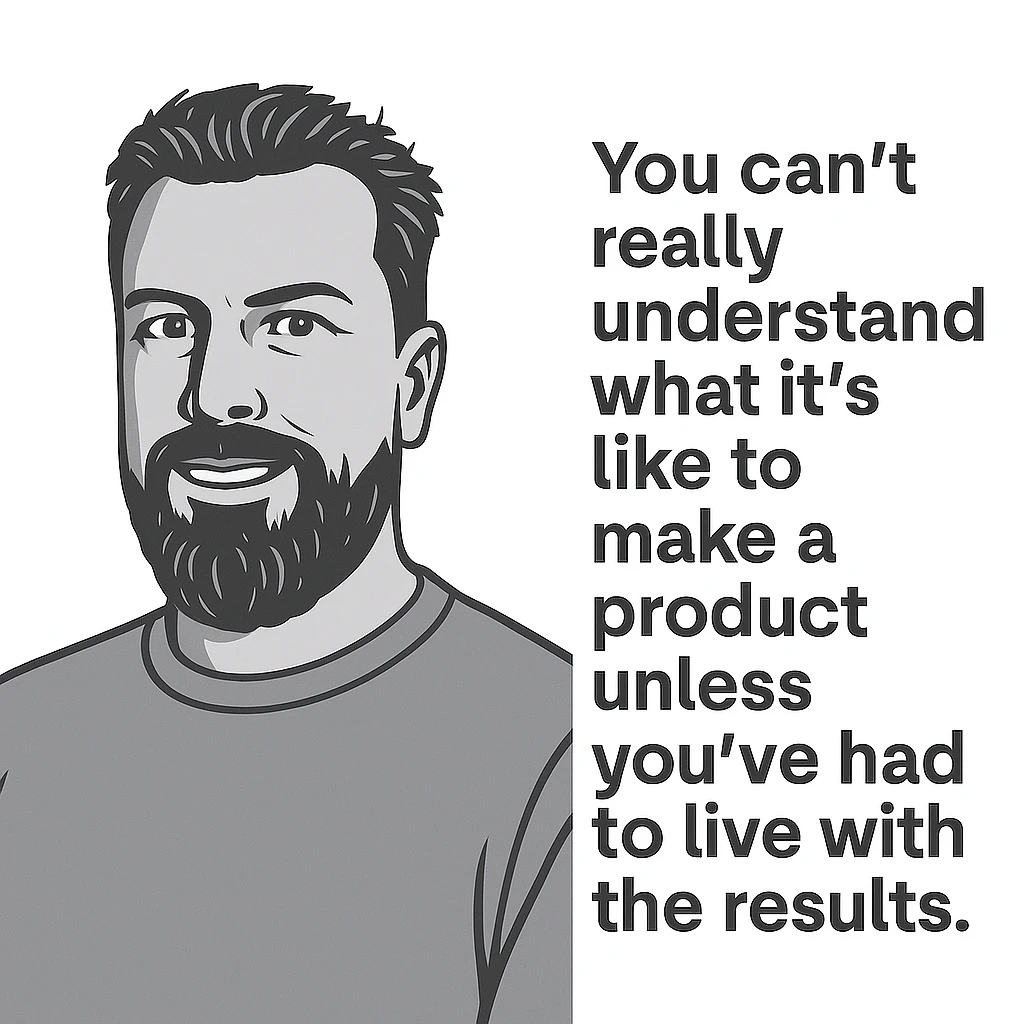
“You can’t really understand what it’s like to make a product unless you’ve had to live with the results.
Consultants and managers who haven’t done that often lack the context that only experience gives.”
That hit home.
Jobs’ point was that real insight comes from owning your outcomes — from being embedded in the process, not observing it from a distance.
When you have to maintain and live with your own design, your perspective changes.
That idea perfectly captured what I’d felt moving from consulting to end-user roles.
The moment I became responsible for my own recommendations, I started thinking differently — not just about design or architecture, but about people, timing, training, and long-term consequences.
You build differently when you’re the one who has to live with it.
(For anyone curious, here’s the clip I’m referring to: Steve Jobs – 1995 Interview on Consulting and Ownership)
Why Both Worlds Matter
Jobs was right about one side of the coin — but I’ve also seen the other.
If you stay too long inside one company, you can lose perspective.
Consulting forces you to think faster, adapt broader, and compare patterns across industries.
So I’ve come to believe the best professionals live somewhere between the two worlds.
Consulting sharpens your skills and broadens your exposure.
End-user work deepens your ownership and empathy.
Each experience feeds the other — one teaches scope, the other teaches consequence.
Looking Back (and Forward)
When I made the move, I didn’t have a plan — just a feeling that I needed to experience both sides.
Only later did I realise it was part of a growth mindset — wanting to not just deliver systems, but to live them.
If you’re a consultant and you’ve been doing it for a decade — go work for an end user. See what ownership feels like.
If you’ve always been in an end-user role — try consulting for a year or two. See how fast you can grow.
Each teaches you something the other never will.
And together, they shape you into a more complete professional — one who designs with empathy, delivers with realism, and never stops learning.
Peace out.
– Andrew Bartlett